High above the rooftops of Phuket, a gleaming white marble colossus has stood sentinel over the Andaman Sea since the early 2000s, drawing millions of pilgrims and travellers to its feet. Few landmarks in Southeast Asia manage to feel simultaneously brand-new and timeless — yet the Big Buddha of Phuket achieves exactly that.
The story of the Big Buddha Phuket begins not in ancient antiquity but in a remarkably recent act of collective devotion. Construction on the Phra Phuttha Ming Mongkol Akenakiri — the statue's formal Thai name — commenced in 2002 on the summit of Nakkerd Hill in the Chalong sub-district. The project was the brainchild of local Buddhist communities and temple authorities who wished to create a landmark that would both honour the island's deeply Buddhist heritage and serve as a spiritual beacon visible from across southern Phuket. The site, rising approximately 400 metres above sea level, was chosen deliberately for its panoramic command of Chalong Bay, Kata, Karon, and the wider Andaman coastline.
From the outset, the project was envisioned as a community-funded undertaking rather than a government commission. Thai Buddhists, expatriate residents, and international visitors were invited to purchase small jade-coloured tiles individually inscribed with donors' names and blessings, which were then affixed to the statue's surface. This grassroots financing model meant construction progressed incrementally over more than a decade, with different sections of the towering figure completed as funds allowed. The approach fostered a profound sense of collective ownership, embedding the statue's creation into the social and spiritual fabric of Phuket in a way that few large-scale monuments anywhere in the world can claim.
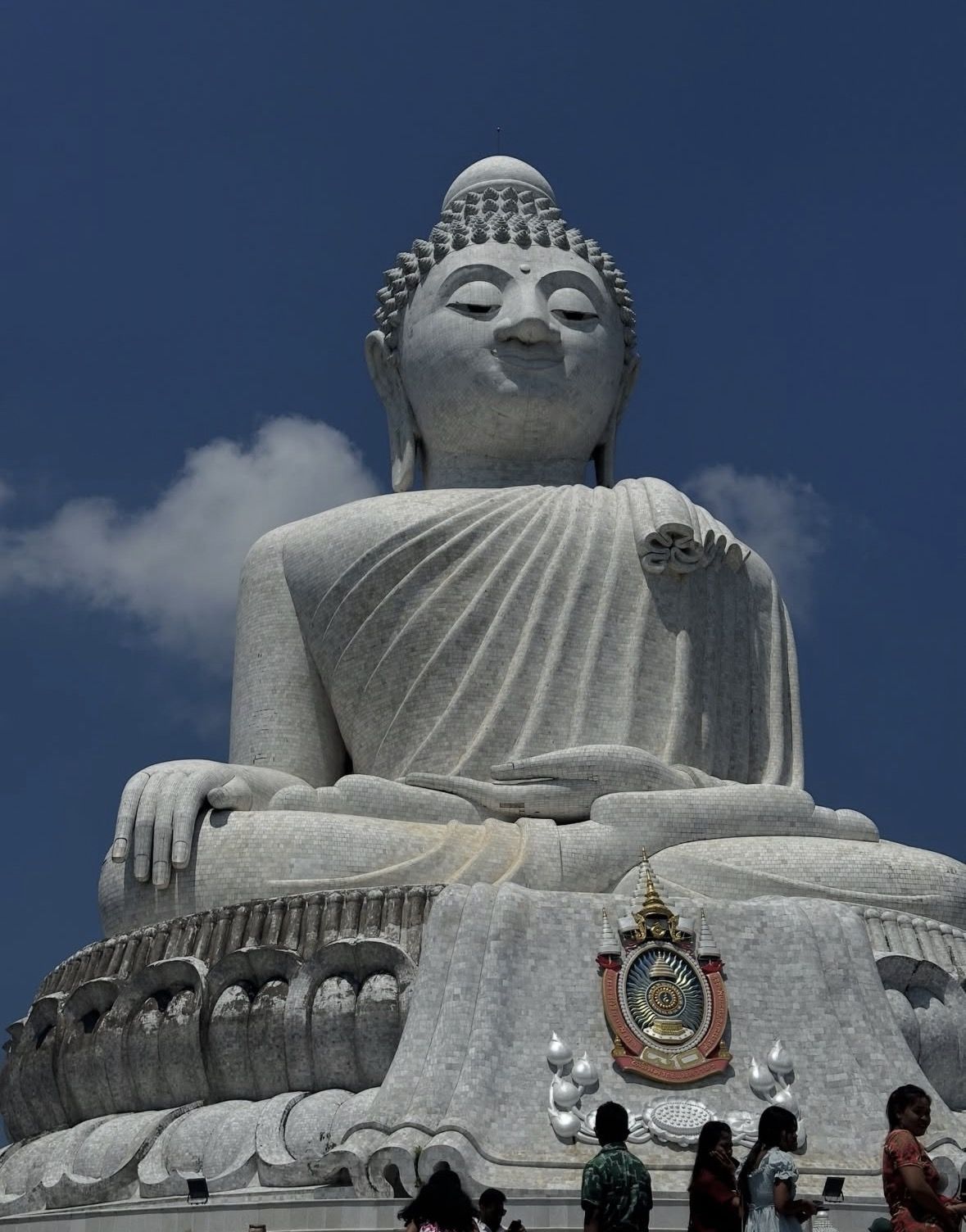
The Big Buddha is constructed in the Maravija posture — the moment of the Buddha's enlightenment, with one hand resting in the lap and the other touching the earth to call the goddess of the ground to witness his achievement of Buddhahood. This pose is among the most sacred in Theravada Buddhist iconography, the school of Buddhism practised widely across Thailand, Myanmar, and Sri Lanka. Its choice was deliberate: the statue was never intended purely as a tourist attraction but as a genuine object of veneration, reflecting the living religious practice of Phuket's majority Buddhist population.
The statue itself stands 45 metres tall and 25.45 metres wide, making it one of the largest Buddha images in Thailand and among the most impressive in the whole of Southeast Asia. It is clad in Burmese white jade marble — a material prized in Buddhist tradition for its purity and luminosity. The gleaming surface catches the tropical sun dramatically, rendering the figure visible from far out at sea and from virtually every elevated vantage point across southern Phuket. Two smaller Buddha statues flank the main image on the terrace platform, and the entire complex is oriented to face both Chalong Bay and the rising sun to the east.
Surrounding the main image, the hilltop complex includes several active shrines, a large collection of ceremonial bells donated by worshippers, ornate guardian figures, and temple buildings that serve the resident monks. Visitors are invited to ring the bells for good luck and to make merit by releasing small birds kept in bamboo cages — a traditional Thai Buddhist practice symbolising the liberation of the soul. Colourful prayer flags and countless donor tile inscriptions cover walls and walkways, transforming the entire summit into an open-air gallery of human faith. The atmosphere at sunrise and sunset, when saffron-robed monks conduct prayers, is particularly atmospheric and deeply moving.
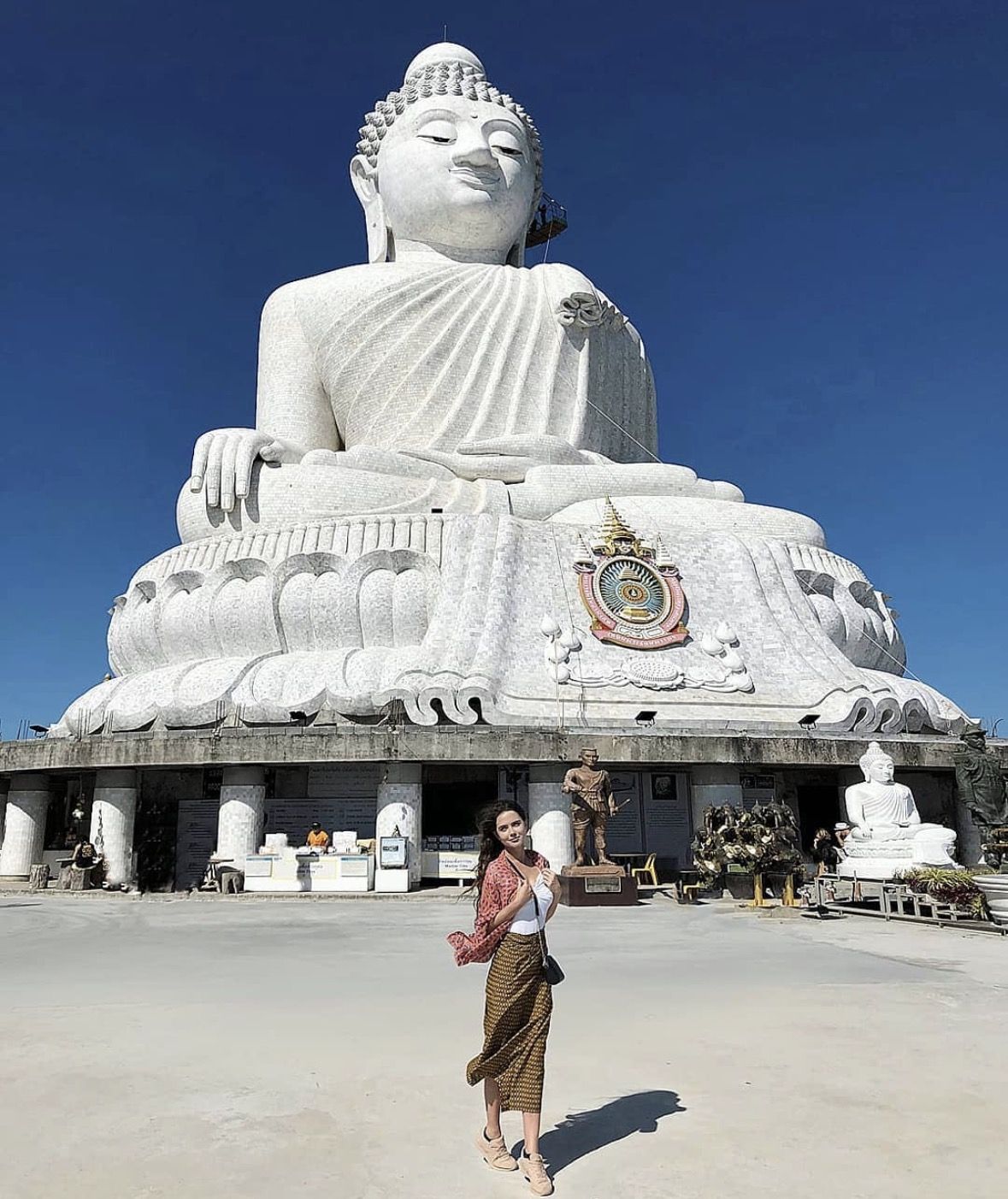
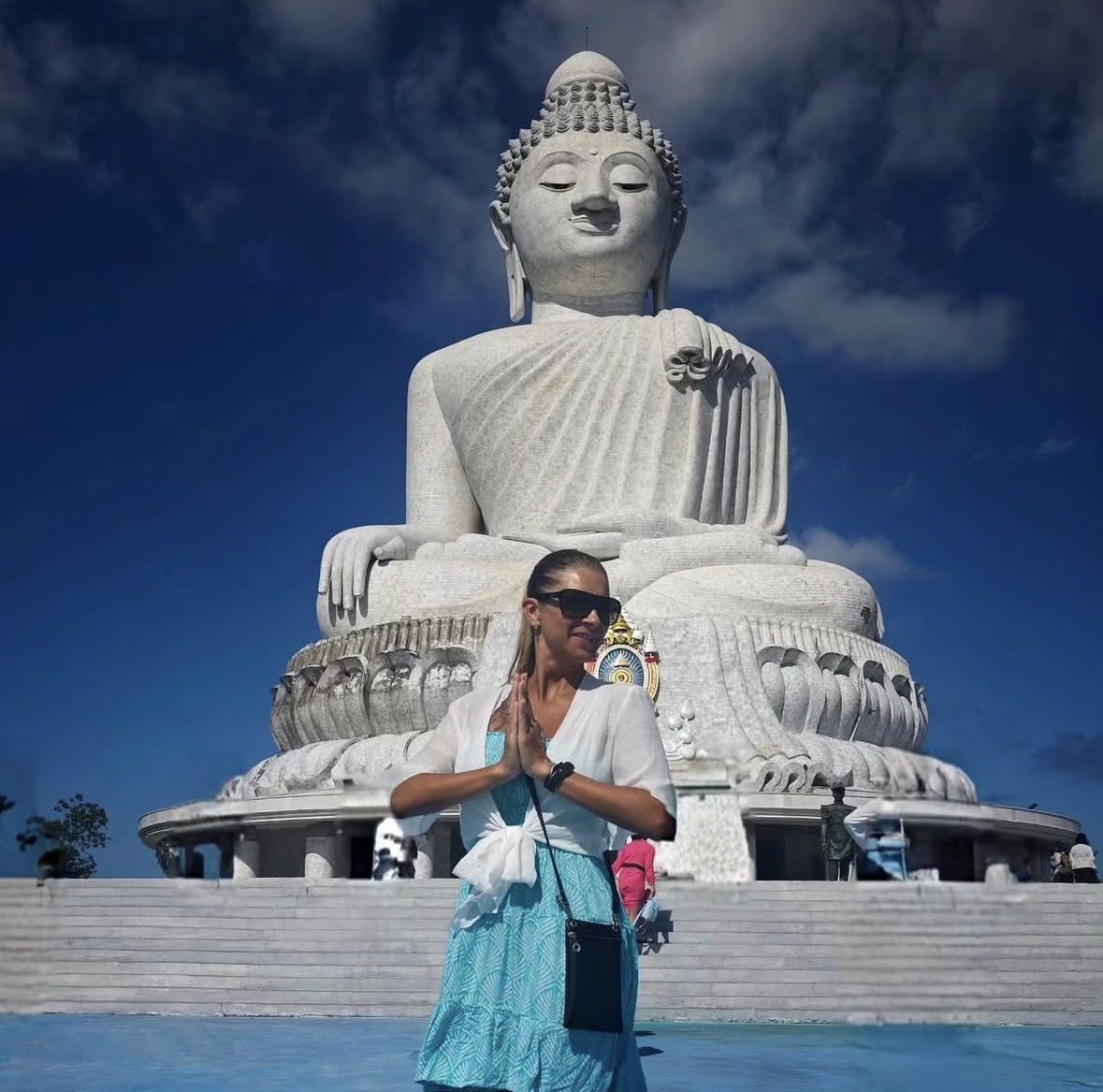
Through the 2000s and into the 2010s, the Big Buddha gradually evolved from a local religious project into Phuket's most recognisable symbol. As Thailand's tourism industry boomed and Phuket's annual visitor numbers surged past ten million, the hilltop statue became an obligatory stop on every island itinerary. International travel publications, guidebooks, and social media accounts amplified its global profile dramatically. The Thai Tourism Authority incorporated the image into promotional campaigns, and tour operators across Phuket began building dedicated excursions around the site, often pairing it with the nearby Wat Chalong temple complex in a half-day cultural circuit.
The 2004 Indian Ocean tsunami, which devastated coastal communities around Phuket on 26 December of that year, gave the statue an added dimension of meaning for many local people. Construction was still ongoing at the time of the disaster, and in its aftermath the project took on new emotional resonance — a symbol of renewal and resilience for an island community working to rebuild. Donations reportedly increased significantly following the tsunami, and the statue became associated not only with Buddhist devotion but with Phuket's collective determination to recover and to protect its communities through the power of faith.
By the time the statue was substantially completed around 2015 — though finishing work and additional complex improvements have continued since — it had already attracted tens of millions of cumulative visitors. The Thai royal family has sent representatives to conduct official blessing ceremonies at the site, lending it additional prestige within the country's deeply royalist Buddhist culture. International dignitaries, celebrities, and heads of state visiting Phuket have regularly included the Big Buddha in their itineraries, and it has appeared in films, documentaries, and countless news features covering both Thailand's tourism industry and its spiritual traditions.
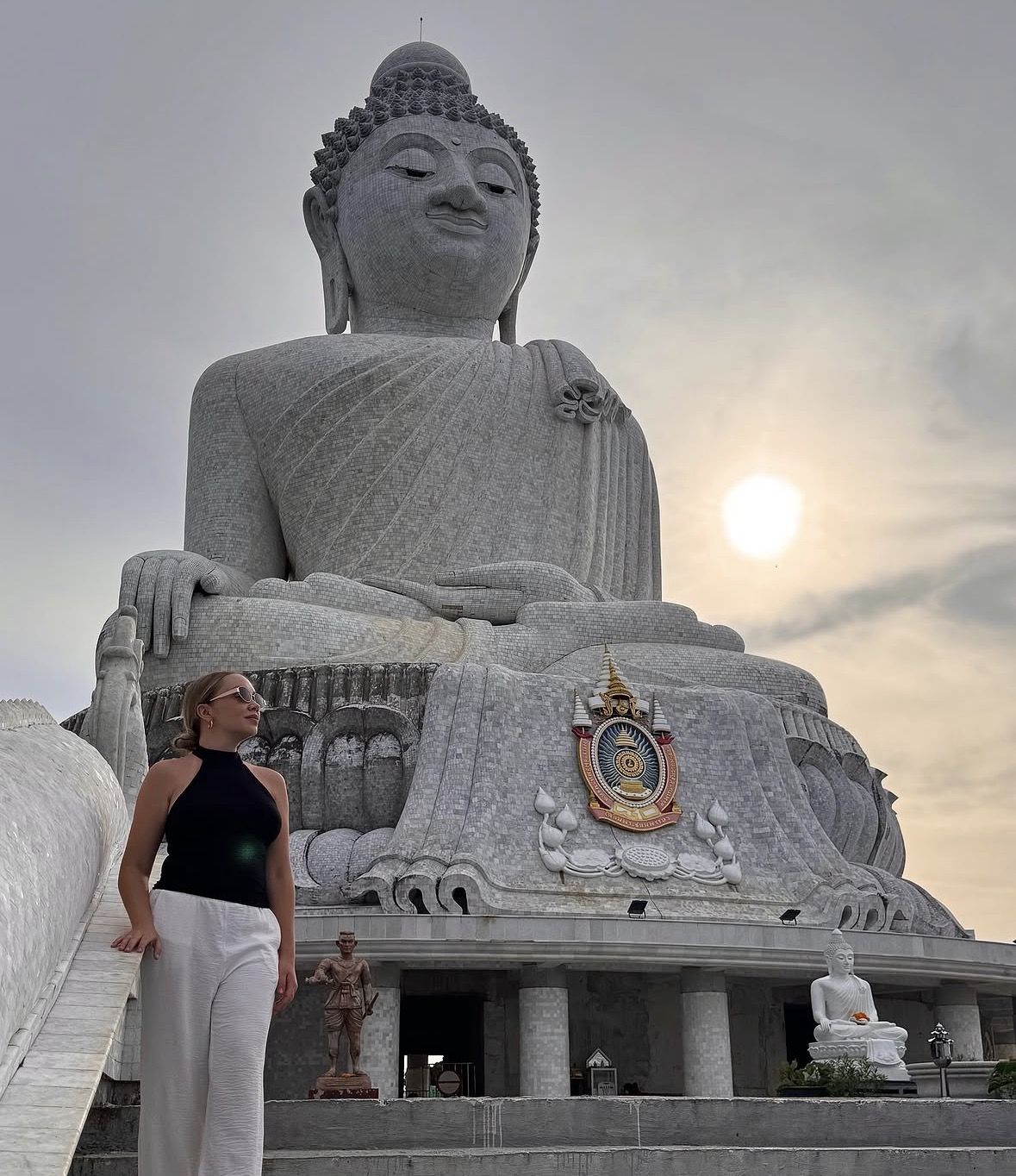
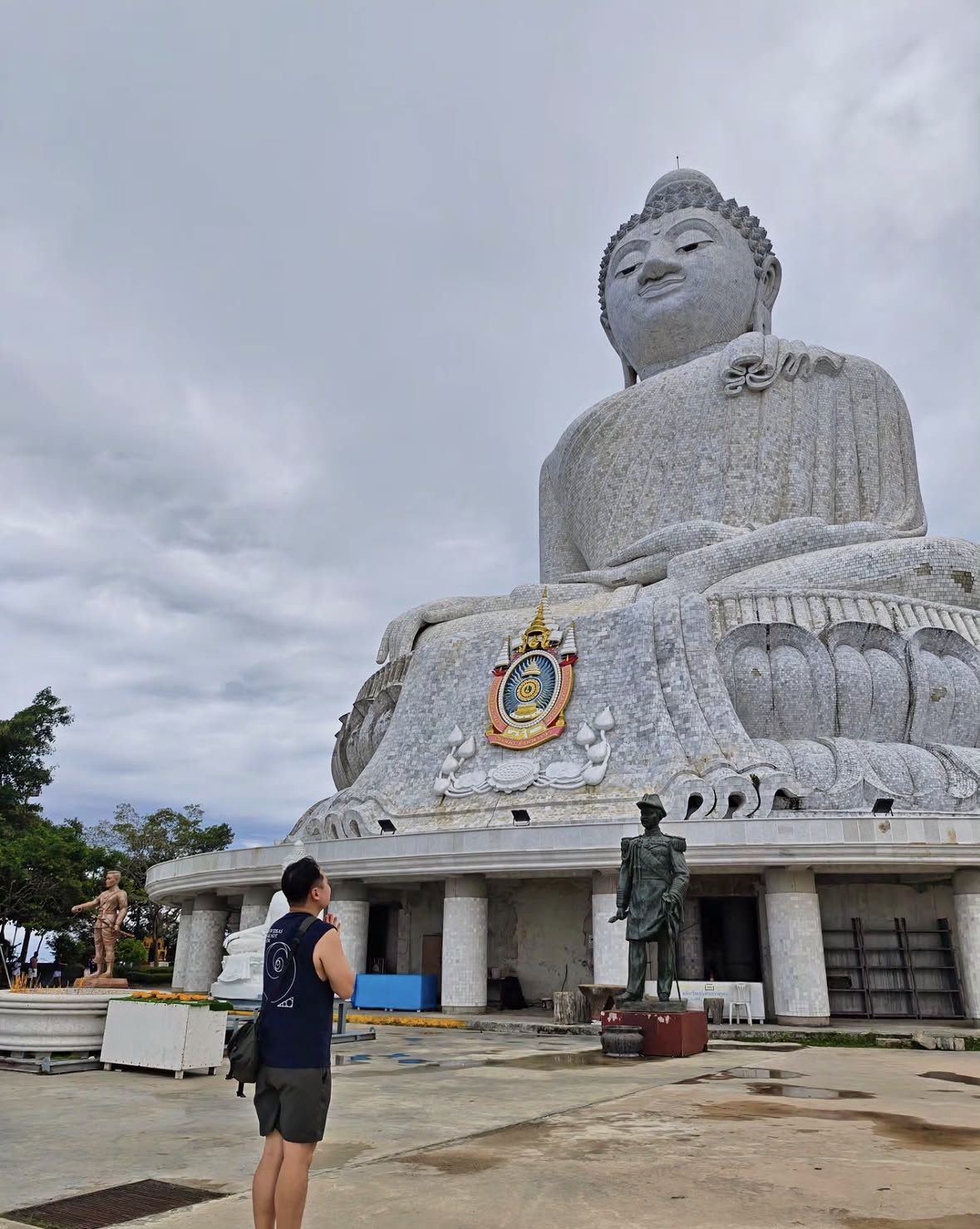
Today the Big Buddha Phuket receives an estimated six thousand or more visitors on busy days, drawn by an experience that seamlessly blends spiritual atmosphere, cultural education, and breathtaking scenery. The 360-degree panorama from the hilltop terrace — encompassing Chalong Bay, the Kata and Karon beaches, Phang Nga Bay to the north, and on clear days the distant silhouettes of offshore islands — is widely regarded as the finest viewpoint on the entire island. Entry to the complex remains free, funded by ongoing donations, though visitors are asked to dress modestly; sarongs and shawls are provided free of charge at the entrance for those who need them.
Whether you approach as a Buddhist pilgrim, a curious traveller, or simply someone in search of one of Thailand's great views, the Big Buddha Phuket rewards the journey entirely. Early morning visits offer cooler temperatures, golden light, and the haunting sound of monks at prayer — an experience that stays with visitors long after they have left the island. Sunset draws romantic and photographic crowds, while midday offers the chance to explore the shrines, bells, and inscribed tile walls in full detail. However you choose to visit, this extraordinary hilltop monument stands ready to astonish — book your Phuket tour today and see it for yourself.
Ready to Experience It Yourself?
A trip to the Big Buddha Phuket is the cultural highlight of any island visit, and pairing it with nearby Wat Chalong and a panoramic sunset makes for an unforgettable half-day. Our handpicked tour partners offer convenient pick-ups from all major Phuket hotels, knowledgeable local guides, and seamless itineraries that bring the island's history to life. Browse our recommended Big Buddha tours below and secure your spot today — availability fills fast during peak season.
Réserver maintenant